
Arrest Warrants in Chesterfield County
A warrant is written judicial process. It lets an officer take someone into custody and bring that person before a judicial officer. In Chesterfield County, as across Virginia, a magistrate or judge reviews a complaint and any supporting facts for probable cause. The police and the Sheriff cannot generate a warrant just by entering a record. Only the court or magistrate decides that the standard is met. Chesterfield's magistrates also issue criminal charges after review, set bail, or commit a person to jail. One more wrinkle matters. The court tied to a charge can differ from the agency that investigates or serves the warrant.
How a Chesterfield County Arrest Warrant Starts
Every Chesterfield County warrant begins with paperwork. Virginia Code sections 19.2-71 and 19.2-72 lay out the complaint and issuance steps. A written complaint gives the magistrate the basis for review. A felony complaint carries extra rules. Those rules even limit who may bring one in some situations. No public form lets a person obtain any felony warrant. The magistrate's role stays judicial: the office weighs probable cause, issues process when authorized, and handles bail questions, but it cannot give legal advice or disclose pending criminal charges to a caller. Virginia's criminal procedure statutes spell out the complaint and arrest-warrant rules that govern this stage.
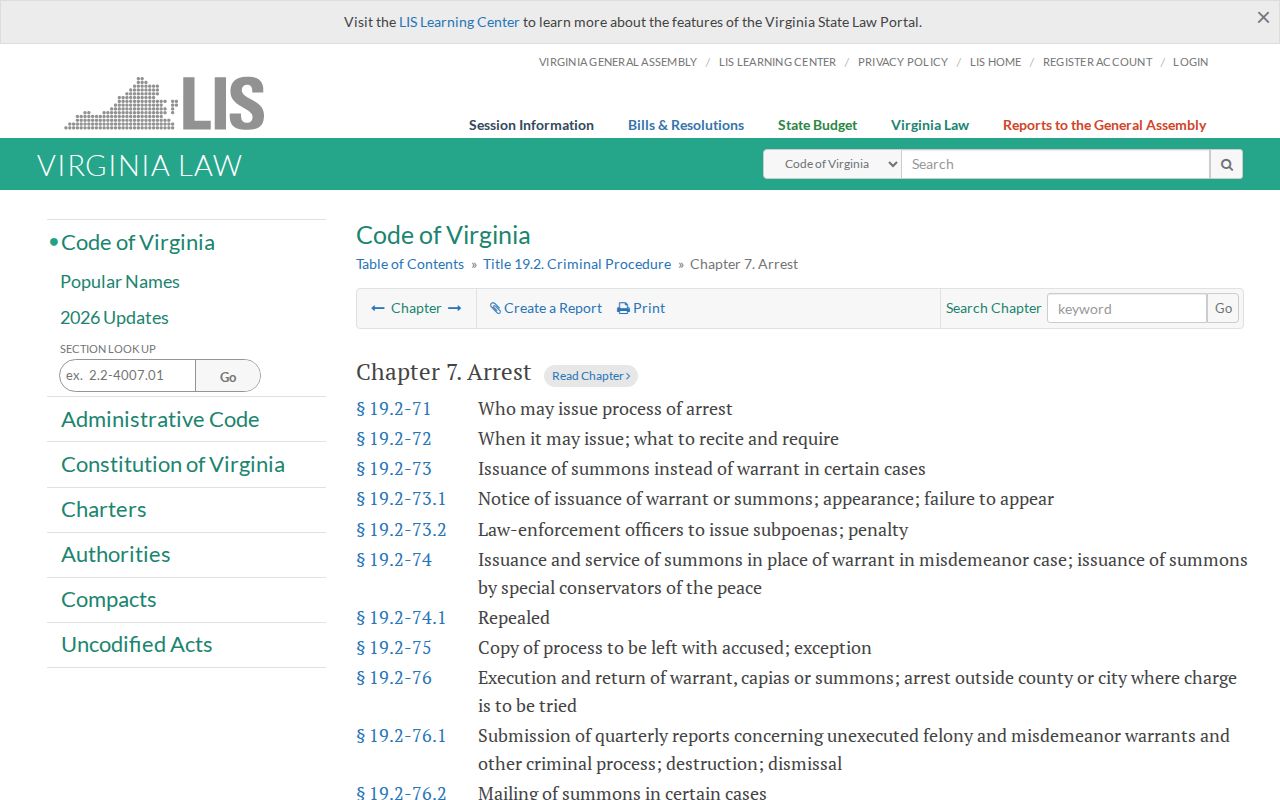
Those rules govern how a Chesterfield County warrant issues; they will not say whether any named person has one right now.
What a Chesterfield County Arrest Warrant Contains
The DC-312 is the official Virginia felony form. It shows what a warrant document can hold. A completed copy may carry case and court identifiers, accused details, the alleged offense, the probable-cause statement, the issuer, hearing information, and later execution or return fields. The public Chesterfield application does not expose that full document.
| Case number | Assigned by the court; no local sample number is published here. |
|---|---|
| Accused | Name and available descriptors; no individual form is reproduced. |
| Charge | Offense description and Virginia Code or tracking fields where used. |
| Issuer | Court, date, time, and magistrate, judge, or clerk role. |
| Probable cause | Complaint or supporting statement on the official form. |
| Service return | Execution date, officer, agency, and return information may be recorded. |
Reading the Chesterfield County Felony Form
The DC-312 splits GDC and JDR court types. It marks criminal or traffic, with case number, charge, and issuance fields. Later service-return details appear too. Personal descriptors show up only as the official form and case require. That layout helps a reader parse a warrant copy. A blank form still shows no Chesterfield case. Virginia Courts' criminal forms index lists the official district-court forms, and a person seeking an actual record should ask the clerk for the case, court, and document type. The state's criminal forms page puts the DC-312 in context for a completed warrant record.
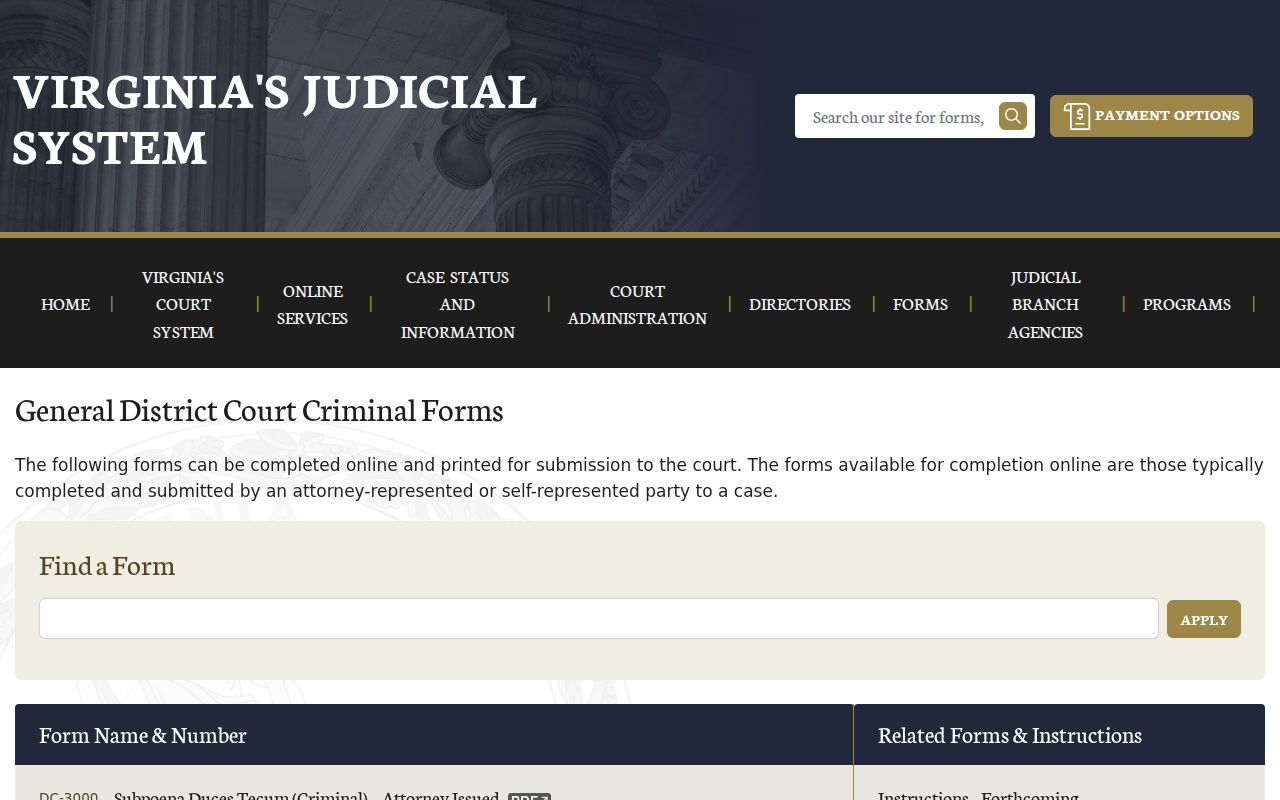
A sample form is never a completed Chesterfield County warrant or proof of an arrest.
How Chesterfield County Arrest Warrants Are Served
Deputies serve the warrants in Chesterfield County. The Sheriff says its deputies execute criminal warrants directed to them by a court. County Police handles most criminal investigations, traffic enforcement, and patrol. Under Virginia law, police officers and other authorized officers hold arrest power as well. So the court that issues a warrant and the agency that serves it can differ. Virginia law also lets qualifying warrants run anywhere in the Commonwealth. An arrest outside the issuing locality sends the officer down a statutory route to a magistrate or proper officer. The public cannot execute or serve a warrant.
Chesterfield County Warrant Service and Return
Serving a warrant is court-ordered law-enforcement work. The Sheriff's Court Operations unit handles court-directed criminal warrants alongside other court process in Chesterfield County. The Police Records Management System supplies the data behind the public application. That app has no service-status field. A service or return event may still appear in the court or agency file. When a person is held outside Chesterfield County, Virginia Code section 19.2-76 describes how the executing officer brings that person before the proper magistrate or officer. Extradition and out-of-state questions call for the issuing agency or counsel. The County Jail information page describes the local facility. It ties the service route to the proper local office. The Virginia Department of Corrections' 2025 account of Chesterfield sweep operations shows probation, police, and fugitive units working together. It is a state-agency example. It is not a tool for identifying anyone on a current warrant list.

This agency page is background only. For a Chesterfield County warrant, the issuing court or serving officer confirms actual service status.
Chesterfield County Arrest Warrant vs Summons
A warrant commands an arrest. A summons just directs an appearance. A capias, often called a bench warrant, grows out of a court obligation such as a missed appearance. Read the actual court paper and ask which step the court in Chesterfield County expects next.
| Feature | Arrest Warrant | Summons | Bench Warrant |
|---|---|---|---|
| What it orders | Arrest and presentation before a judicial officer | Appearance at a stated time or place | Return to court for an existing obligation |
| Basis | Probable cause for an offense | Notice or charging process | Failure to appear or comply |
| Issuer | Magistrate or judge | Court or authorized officer | Judge or court handling the case |
| Next step | Confirm court, counsel, and bond process | Attend as directed | Ask the issuing court about recall or appearance |
Chesterfield Search Warrants Are Different
A search warrant is not an arrest warrant. It lets officers look for evidence rather than take a person into custody, so the word alone tells you little. Read the heading, the court, the case type, and the command before you pick up the phone. Chesterfield County residents sometimes mistake one document for the other. In Virginia, Virginia Code section 19.2-54 governs how search-warrant affidavits are filed and when the public may inspect them. A court can also seal material temporarily for good cause. A sealed or unexecuted affidavit may stay out of public view.
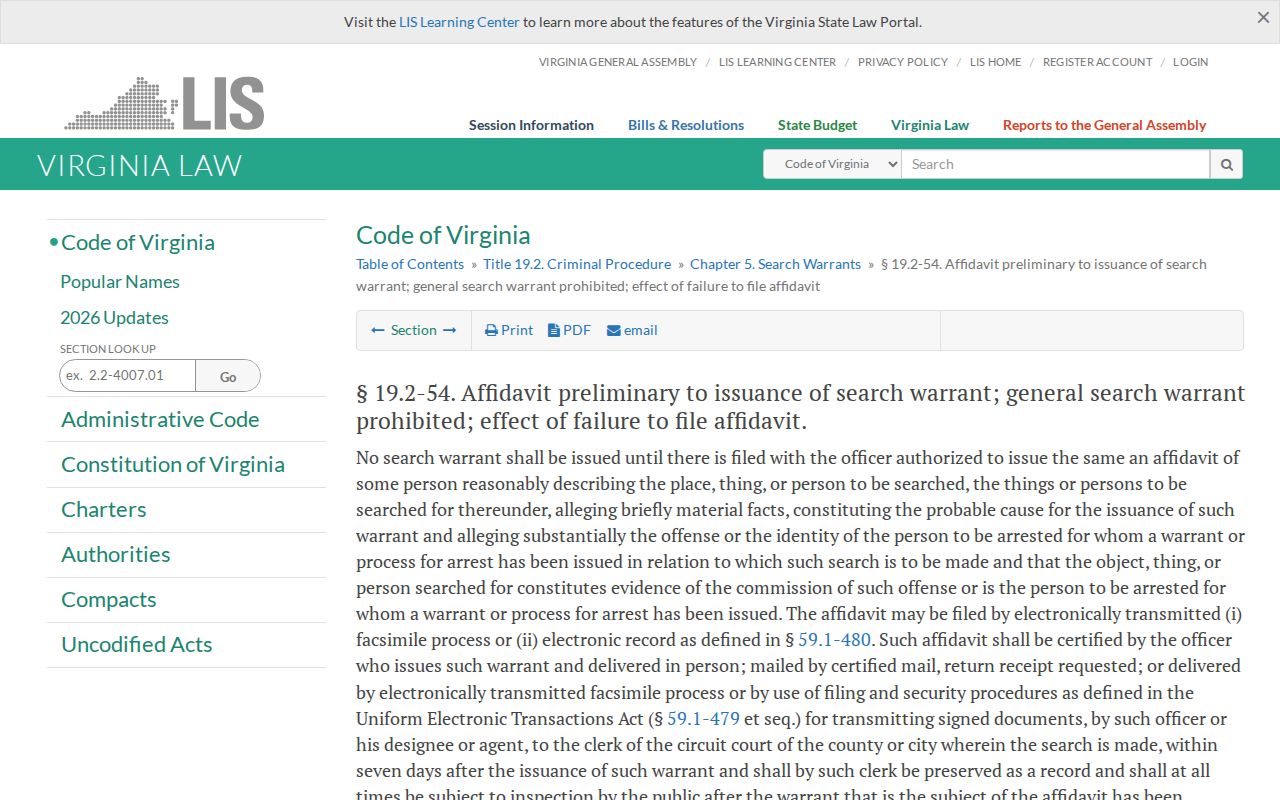
A public filing rule for search warrants does not make every arrest-warrant record open.
If You Have a Chesterfield County Arrest Warrant
Facing a Chesterfield County arrest warrant? Confirm which court issued it and what kind of case it is. That court alone can recall or quash the warrant, and a clerk there can walk you through the process, though clerks cannot advise you on the charge itself. A lawyer can help you weigh a hearing, plan a surrender, or sort out bond.
Important: Ask a Virginia lawyer about the warrant and surrender plan before appearing; the county publishes no universal warrant bond or recall form.
Chesterfield County Arrest Warrant Next Steps
For warrant and inmate questions, call the Chesterfield County Sheriff's operational line at 804-748-1476. The Magistrate's Office sits at 6900 Mimms Drive, and its number is 804-748-1410. That line answers after hours too. County instructions say anyone turning themselves in should go to the County Jail front lobby and ask a Deputy Sheriff for help. Bond gets posted at the Magistrate's Office next to the jail. A friend or family member may post it, but the court sets the terms and publishes no standard amount. Need a lawyer? The Virginia State Bar referral service is 1-800-552-7977, since magistrates and clerks cannot recommend counsel.